Bedding · Materials · Care
Choosing a Wool Comforter: Fill, Weight, and Seasonal Comfort
The right comforter does more than keep out the cold. It shapes the feeling of a bed: airy or cocooning, crisp or enveloping, a simple layer or the centrepiece of a considered sleep ritual. Wool can bring breathable warmth to that equation, but fill weight, shell fabric, construction, and care all influence how it performs.
Published October 28, 2026
Wool has a particular appeal in bedding because warmth need not mean heaviness. A well-made wool comforter can feel insulating without the dense, sealed-in sensation some sleepers associate with thick bedding. The fiber absorbs moisture vapor and can help moderate the microclimate beneath the covers, making wool an intriguing choice for people whose comfort shifts over the course of the night.
Still, “wool comforter” is not a single, uniform experience. A lighter fill may suit a warm bedroom or a sleeper who tends to overheat; a more substantial one may feel reassuring in a colder room. The cover fabric, quilting pattern, duvet cover, and other layers matter, too. Rather than choosing by season name or product label alone, think about the conditions in which you sleep and the kind of warmth you actually enjoy.
Why wool feels different in bed
Wool fibers are naturally crimped, and the structure helps create pockets of air that contribute to insulation. Wool can also take up moisture vapor from its surroundings before it feels damp to the touch. Together, these qualities help explain why wool bedding is often described as breathable and temperature-regulating. They do not mean a comforter actively controls body temperature or guarantees a cooler night; your room, sleepwear, mattress, health, and personal preferences all play a role.
That distinction is useful when comparing bedding. A comforter is one element in a layered system, not a climate-control device. If a bedroom is consistently hot, a lighter fill and breathable sheets may help, but they cannot compensate for every source of heat. Likewise, a wool comforter may feel lovely in a cool room, yet still need an additional blanket when temperatures fall sharply.
Wool also has a different hand and drape from down or many synthetic fills. Depending on its construction, it may feel more evenly weighted and less lofty. Some people enjoy that sense of substance; others prefer bedding that feels almost weightless. Neither response is a quality verdict. Comfort is personal, and the most sophisticated choice is the one that suits your own sleep habits.
Fill weight: the number behind the warmth
Fill weight refers to how much insulating material is used in a comforter, often expressed as ounces per square yard or as a total weight for the item. It is an important point of comparison, but it is not a complete warmth rating. Two comforters with similar fill weight can feel different because of fiber type, fiber preparation, quilting, size, and shell fabric.
When a specification is given per square yard, it describes the amount of fill relative to surface area rather than the total weight of the whole comforter. This makes it easier to compare products of different sizes, although construction still matters. If a listing gives only a general label such as “lightweight,” look for more detail: fill composition, fill weight, dimensions, and intended use can make the description more meaningful.
- Light fill: Often a useful starting point for warmer months, well-heated rooms, or sleepers who prefer a modest layer. It can also work year-round in a mild climate, depending on the rest of the bedding.
- Medium fill: May suit changeable weather and bedrooms that are neither very warm nor very cold. Consider it a flexible option, not a universal standard; brands use weight categories differently.
- Heavier fill: Can provide a more substantial layer in a cold room or during winter. It may be less comfortable for people who sleep warm, especially when combined with flannel sheets or several blankets.
Do not assume that the heaviest option is the most luxurious or durable. More fill can add warmth and weight, but it does not automatically improve breathability, workmanship, or longevity. The goal is a balance: enough insulation for the room and sleeper, with a weight that still feels inviting rather than cumbersome.
Match the comforter to your room and routine
Before comparing product labels, take a close look at the bedroom itself. Does it stay warm overnight, or cool considerably after the heating goes off? Is the bed near a drafty window? Do you share bedding with someone whose temperature preferences differ from yours? A short, practical assessment can be more useful than buying by season alone.
Think, too, about your own patterns. If you often push covers away in the middle of the night, start with a lighter comforter and adjust with removable layers. If you wake cold despite a warm room, consider whether the mattress, sheets, sleepwear, or gaps around the bed may be contributing before choosing a heavier fill. For couples with different needs, separate blankets can provide a more comfortable solution than trying to find one comforter that satisfies both.
Climate is only part of the story. A lightweight wool comforter might be appropriate through much of the year in a temperate home, while a cold, poorly insulated bedroom may call for additional layers. Seasonality is best treated as a guide rather than a rule. Your indoor temperature, personal warmth, and preference for weight should have the final say.
Shell fabric and quilting deserve attention
The shell is the fabric enclosing the fill, so it has a direct influence on touch, drape, and how the comforter sits inside a duvet cover. Cotton is a common choice, with a range of weaves and finishes. A smooth cotton sateen, for example, has a different feel from a crisp percale. Thread count is sometimes advertised prominently, but it should be considered alongside fiber quality, weave, and the overall construction rather than treated as a stand-alone measure of comfort.
Quilting helps keep fill distributed. Stitching patterns may divide the comforter into sections, limiting how far the filling can shift, while other constructions use internal structures to support more even distribution. Look for clear information about how the fill is secured. Uneven warmth, lumps, and empty areas can diminish comfort, regardless of the fiber’s natural qualities.
Size also matters. A comforter that barely covers the mattress edges may leave gaps when you move, while generous overhang can add a more enveloping look. Check the stated dimensions against your mattress depth and preferred drape. If you plan to use a duvet cover, confirm that the comforter will fit comfortably inside and that the cover has ties or other means of keeping the insert in place.
A lighter option for flexible layering
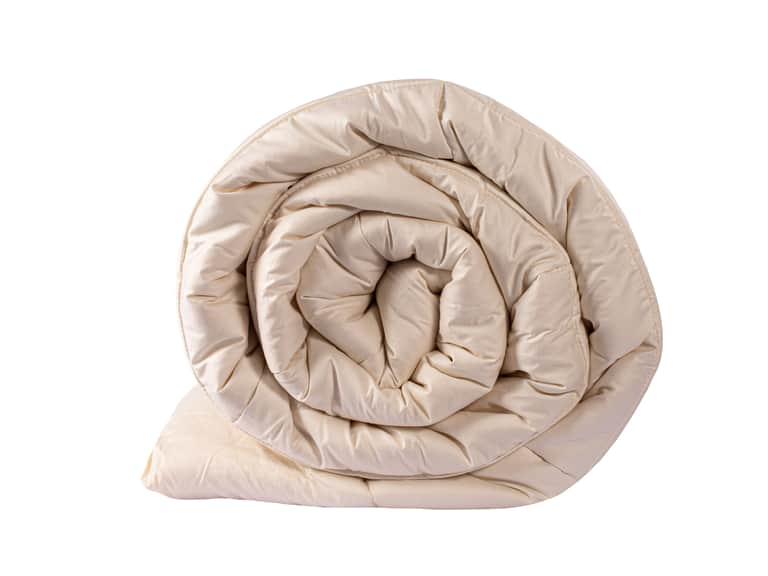
For sleepers seeking a breathable layer rather than maximum winter insulation, the Sleep and Beyond myMerino Wool Comforter Light is one example of a lighter-weight wool design. It is described as filled with GOTS-certified organic wool and covered in 400-thread-count GOTS-certified organic cotton sateen. The listed fill weight is six ounces per square yard, and its quilting is designed to help prevent the wool batting from shifting.
Its lighter construction is positioned for three-season use, which may appeal to people who want a single comforter that can be paired with different layers as the weather changes. The product details describe it as breathable and moisture-managing, but no comforter can promise the same experience for every sleeper or room. Consider the stated dimensions, cover material, care instructions, and your own bedroom temperature before deciding whether this kind of fill is suitable.
At home, a lighter wool comforter can form the foundation of a flexible bed. Use it on its own when nights are mild, then add a blanket or warmer duvet cover when the temperature drops. This approach allows the bedding to adapt without requiring a different comforter for every season—and makes it easier to fine-tune warmth without committing to a heavier layer all night.
Layering for seasons that refuse to stay put
Layering is both practical and aesthetic. A fitted sheet, top sheet, comforter, and optional throw can be adjusted independently, helping accommodate changes in room temperature. A duvet cover adds a washable protective layer and can alter the feel of the bed: lightweight cotton may feel cool and crisp, while a brushed fabric can add a warmer hand.
For spring and autumn, a lighter comforter with a spare blanket nearby offers flexibility when evenings turn chilly. In winter, the same base layer can be combined with a blanket or warmer cover, provided the accumulated weight remains comfortable. In summer, some sleepers may prefer to fold the comforter back or use a sheet alone on warmer nights. There is no need to insist on one setup for an entire season.
Pay attention to how the layers interact. A thick mattress protector, flannel sheets, heavy sleepwear, and a substantial comforter can add up to more warmth than expected. If you wake hot, remove one layer at a time rather than replacing the entire bedding set. Small changes can reveal which part of the setup is responsible for the discomfort.
Care that preserves loft and structure
Wool bedding generally benefits from a lighter touch than everyday cotton sheets. Always follow the manufacturer’s care label, since fiber processing, shell construction, and quilting determine what a particular comforter can safely tolerate. Do not assume that wool bedding is machine washable simply because wool clothing sometimes is; agitation, heat, and excess moisture may damage the fill or cause the comforter to lose its shape.
A duvet cover is one of the simplest ways to protect a comforter from body oils, dust, and everyday spills. It can be removed and washed more easily than the comforter itself, reducing the need for frequent cleaning of the larger item. Airing the comforter periodically in a dry, shaded, well-ventilated space can help refresh it. Follow care guidance about sunlight and moisture, and make sure bedding is completely dry before it is covered or stored.
- For small marks: Spot-clean only if the care instructions allow it. Use a gentle method and avoid saturating the fill.
- For a significant spill: Consult the manufacturer’s directions or a professional cleaner familiar with wool bedding before treating the comforter.
- For storage: Store it clean and thoroughly dry in a breathable bag or container, away from dampness and pests. Avoid prolonged compression, which can affect its loft.
- For everyday upkeep: Shake or gently reposition the comforter as needed, and let it air out between uses when practical.
Regular laundering is not automatically better. A cover and careful spot treatment can reduce the need for full cleaning, while too much washing may shorten the life of a delicate textile. If the care label recommends professional cleaning, follow that instruction rather than experimenting with a home wash cycle.
What to look for in product details
Clear specifications make it easier to assess a wool comforter without relying on vague promises. Before choosing, look for the precise fiber content, stated fill weight, shell composition, construction details, size options, and care instructions. If the product includes certifications, check what they cover and whether they apply to the fiber, processing, or finished item.
It is also worth distinguishing between wool types and blends. Merino wool, for example, is associated with fine fibers, but the exact feel of a finished comforter depends on the fill and its construction. A blend may change weight, resilience, price, or care requirements. Read the full materials list rather than assuming that a product name tells the whole story.
Finally, consider practical details: Does the comforter have corner ties? Is its size compatible with your duvet cover? Is the fill held evenly in place? Can you maintain it with the care routine you are realistically prepared to follow? A beautifully made textile should work with daily life, not demand a routine that is difficult to sustain.
A considered choice, not a seasonal rule
Choosing a wool comforter is less about finding one supposedly perfect weight and more about understanding the balance between insulation, breathability, touch, and upkeep. Fill weight offers a valuable point of comparison, but the shell, quilting, bedroom climate, and your own response to warmth shape the experience just as strongly.
Begin with how you sleep: warm or cool, still or restless, alone or sharing covers. Then consider the room’s overnight temperature and the layers already on the bed. A lighter fill may offer year-round adaptability when paired with blankets; a heavier one may be the more comfortable choice in a reliably cold bedroom. Neither is inherently superior.
The most enduring bedding is chosen with the same care as any well-used home textile: for its materials, its construction, and the way it fits into everyday rituals. With thoughtful layering and gentle maintenance, wool can bring a quietly substantial kind of comfort—warmth that feels considered rather than excessive, and a bed that can shift with the season.
Quick checklist before you choose
- Compare fill weight on a consistent basis, preferably per unit of area.
- Match the warmth to your room temperature and sleeping habits, not just the calendar.
- Check the shell fabric, quilting, size, and how the fill is secured.
- Plan how you will layer the comforter through warmer and cooler nights.
- Read the care label and use a duvet cover to protect the comforter where appropriate.
- Choose a weight that feels comfortable to sleep under, not simply the one that sounds warmest.